
By Melle Hsing
Published 1:38 PM EST, Wed June 16, 2021
Introduction
There is the saying that loneliness has the same impact as smoking 15 cigarettes a day, which may not be an exaggeration in reality. Loneliness is the feeling of isolation, more specifically the unpleasant awareness that one is isolated. Although there is no formal diagnosis for chronic loneliness, it can pose serious threats to mental and physical health: including hypertension, depression, Alzheimer’s disease, and more. During the pandemic where large social gatherings are not encouraged, it is arguably unsurprising that there would be higher risk of chronic loneliness in individuals around the world. The negative health effects of loneliness are more dire in the elderly population, who may already suffer from loneliness due to being far away from family members in modern times. This article explores the evolution of loneliness and how it manifests in individuals, as well as what can be done to alleviate loneliness and its associated health risks.
Cacciopo’s Evolutionary Theory of Loneliness
A key difference between being alone and lonely is that the former is objective while the latter is not. Even when alone, a person may not feel lonely and when surrounded by people, one can feel lonely. Surprisingly, loneliness has evolved as a feeling to benefit human survival. According to Cacciopo’s Evolutionary Theory of Loneliness (ETL), loneliness not only induces depressed feelings, but it also acts as a warning that one’s social connections to other human beings may be prone to breaking. Humans are social animals by nature, and that renders us more favourable of forming groups to increase our chances of survival. To overcome feelings of loneliness, one is encouraged to reach out to others. Hence, from an evolutionary perspective loneliness is actually a beneficial signal which motivates individuals to reform social connections in order to stop the detrimental feelings of loneliness from physically harming one’s own body.
In a study done by Cacciopo and other researchers in 2009, lonely participants and non-lonely participants were asked to observe unpleasant pictures of people and objects. Meanwhile, researchers recorded the activation of the temporo-parietal junction (TPJ), a part of the brain which — according to scientists — handles mind tasks involving putting oneself in someone else’s shoes. The researchers hypothesized that the cause of loneliness is due to a self-protecting mechanism, which tells an individual that they need to take care of themselves before interacting with others under unfavourable or risky circumstances, resulting in social isolation. The study showed that non-lonely participants had higher activation of the TPJ and thus more inclination to put themselves in the perspective of others. On the other hand, lonely participants had lower activation of TPJ which links to the idea that lonely participants prioritise their own needs over those of others.
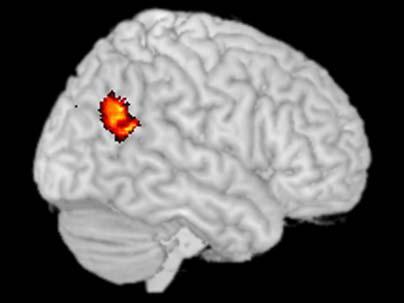
Figure 1: Temporo Parietal Junction (red) in the Brain, sourced from Brian’s Bewildering Brain Blog
Hence, the cause of loneliness supposedly ensures survival under certain circumstances where one’s own risk outweighs the need to prioritise the group, while loneliness itself is also a way of ensuring survival under socially favourable circumstances.
Loneliness is also a heritable trait. A large twin study published in 2005 found that genetics contributed to 48% of the causes of loneliness, which confirms the results from a previous one-year study which investigated how loneliness was passed down as a trait. Nonetheless, it is important to keep in mind that environmental factors also influence the susceptibility to chronic loneliness and that genetics is not a defining factor of whether a person will feel chronic loneliness or not.
Chronic Loneliness in
Modern Times
There are many symptoms of loneliness ranging from loss of concentration to increased desires for engaging in certain activities such as eating, binge-watching videos, or shopping excessively. Although the proposed evolutionary explanation for loneliness may no longer apply as effectively in modern times as in the past, the same survival mechanism can still be seen throughout the modern lifestyle. For example, working from home has become more common ever since the COVID-19 social restrictions, and as a result more people are becoming isolated in their homes. Loneliness therefore warns oneself about the lack of social interaction in light of the pandemic, encouraging individuals to reach out to each other despite this being counterproductive in terms of pandemic control.
As stated earlier, there is no official clinical diagnosis for chronic illness. However, there are still many preventive measures and lifestyle changes that can be implemented to alleviate the negative impacts of chronic loneliness. Making use of social media apps such as Whatsapp, Facebook, and Skype could be beneficial for connecting with others without having to physically meet them under unprecedented times. Additionally, learning to do something new such as painting or dancing, volunteering in a community event, or simply taking a walk outside in nature can help relieve one’s own mental state. Changing one’s mindset to be more open to others and also polishing up on social skills are two methods which have shown to be effective in improving symptoms of loneliness.
Melle Hsing, Youth Medical Journal 2021
References
Cacioppo, John T et al. “Evolutionary Mechanisms For Loneliness.” Cognition & Emotion vol. 28,1 (2014): 3-21. doi:10.1080/02699931.2013.837379.
“How Loneliness Can Make You Sick.” American Psychological Association, http://www.apa.org/science/about/psa/2017/09/loneliness-sick.
“Loneliness during Coronavirus.” Mental Health UK, http://www.mentalhealth.org.uk/coronavirus/loneliness-during-coronavirus.
Raypole, Crystal. “Is Chronic Loneliness Real?” Healthline, http://www.healthline.com/health/mental-health/chronic-loneliness#when-to-see-a-doctor.
“Social Isolation, Loneliness in Older People Pose Health Risks.” National Institute on Aging, 23 Apr. 2019, http://www.nia.nih.gov/news/social-isolation-loneliness-older-people-pose-health-risks#:~:text=Research%20has%20linked%20social%20isolation,Alzheimer’s%20disease%2C%20and%20even%20death.
“The Temporoparietal Junction.” brianfarishblog.wordpress.com/2015/02/05/the-temporoparietal-junction-tpj/.
 Youth Medical Journal
Leave a comment